Electricity is an essential part of our daily lives, but it can become extremely dangerous if not handled properly. One of the most common electrical hazards is electricity leakage, which often leads to electric shock accidents at homes, workplaces, and construction sites. Understanding what electricity leakage is, how electric shock happens, and how to prevent it can save lives. If you want to check your FESCO bill, visit fescoobil.pk.”
What Is Electricity Leakage?
Electricity leakage occurs when electric current escapes from its intended path and flows through unwanted routes, such as damaged wires, exposed cables, faulty appliances, or poor insulation. Instead of flowing safely through electrical wiring, the current leaks into surrounding objects, metal surfaces, or even the human body.
Electricity leakage usually happens due to:
Damaged or old wiring
Loose electrical connections
Broken insulation
Moisture or water contact with electrical systems
Low-quality electrical appliances
What Is Electric Shock?
An electric shock occurs when electric current passes through the human body. The human body contains water and minerals, which makes it a good conductor of electricity. When a person touches a live wire, faulty appliance, or leaked current source, electricity flows through the body, causing injury.
Electric shock severity depends on:
Voltage level
Duration of contact
Path of current through the body
Body condition (wet or dry skin)
Common Causes of Electric Shock
Electric shock accidents commonly occur due to:
Touching exposed or damaged wires
Using electrical devices with wet hands
Faulty plugs, sockets, or switches
Poor earthing or grounding system
Working near live power lines without safety gear
Overloaded electrical circuits
Dangers of Electricity Leakage and Electric Shock
Electric shock can cause serious health issues, including:
Muscle spasms and burns
Heart rhythm disturbance
Loss of consciousness
Severe internal injuries
Fire hazards due to short circuits
In extreme cases, death
Even a small leakage current can be fatal if it passes through vital organs.To learn more about electric shock prevention, electrical leakage, and fire safety guidelines, refer to the official resource
How to Prevent Electricity Leakage and Electric Shock
Preventive measures can significantly reduce electrical risks. Follow these safety solutions:
1. Use Proper Earthing (Grounding)
A good earthing system safely directs leaked current into the ground, preventing electric shock.
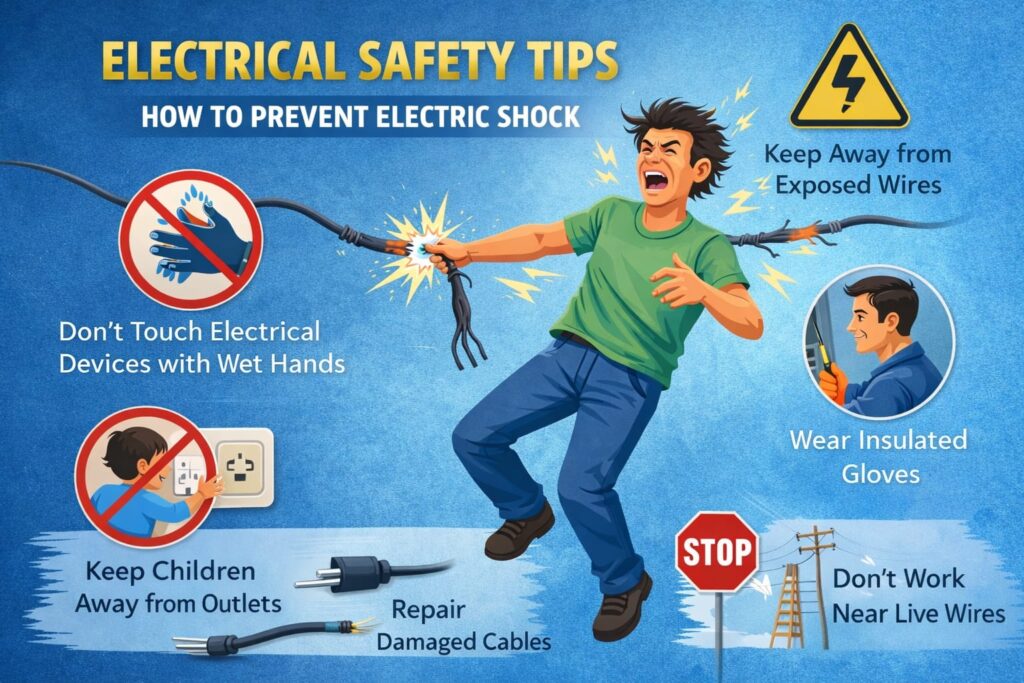
2. Repair Damaged Wires Immediately
Never ignore cracked, exposed, or frayed wires. Replace damaged cables and sockets as soon as possible.
3. Avoid Water Contact
Do not touch electrical devices with wet hands. Keep electrical systems away from water and moisture.
4. Install Safety Devices
Use:
Circuit breakers
Residual Current Devices (RCD)
Earth Leakage Circuit Breakers (ELCB)
These devices automatically cut off power when leakage is detected.
5. Use Insulated Tools and Gloves
Always use insulated gloves and tools while handling electrical equipment.
6. Keep Children Away
Cover electrical outlets and keep children away from sockets and exposed wiring.
7. Avoid Working Near Live Wires
Never attempt electrical repairs near live power lines without proper training and protective equipment.
What to Do in Case of Electric Shock?
If someone gets an electric shock:
Do not touch the person directly
Turn off the main power supply immediately
Use a dry wooden object to separate the person from the source
Call emergency services
Provide first aid if trained
Conclusion
Electricity leakage and electric shock are serious hazards, but they are completely preventable with proper awareness and safety measures. Regular electrical maintenance, safe usage habits, and installation of protective devices can protect lives and property. Always treat electricity with caution—because safety should never be compromised. Must Visit https://www.cdc.gov/niosh/docs/2004-101/chklists/n53ele~1.htm