Many electricity consumers in Pakistan face confusion when choosing the right electricity meter. One of the most common questions asked by FESCO users is whether a single phase or three phase meter is better and if the meter type affects the electricity bill.
This complete guide explains FESCO meter types, their differences, advantages, and how to choose the right meter for your home or business.
What Are Electricity Meter Types in FESCO?
FESCO (Faisalabad Electric Supply Company) provides electricity connections based on consumer load requirements. There are mainly two types of electricity meters used by FESCO:
Single Phase Meter
Three Phase Meter
Each meter type is installed according to approved load and usage. Selecting the correct meter helps avoid voltage issues, billing confusion, and frequent complaints.
What Is a Single Phase Electricity Meter?
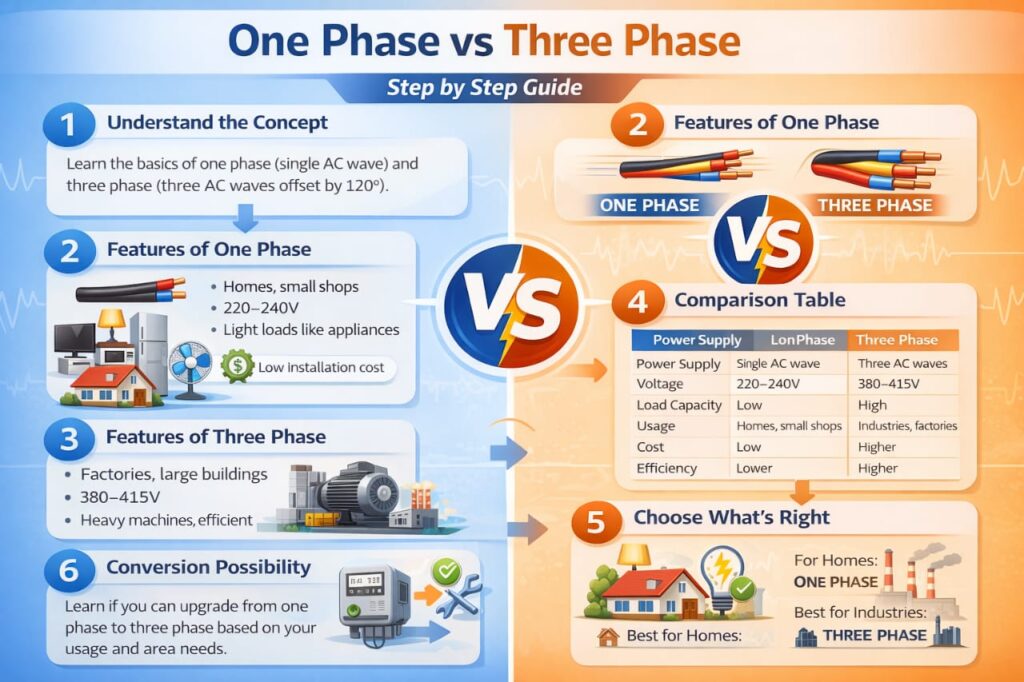
A single phase electricity meter is commonly used for residential electricity connections with low to medium load.
Key Features of Single Phase Meter
Operates on 230 volts
Designed for low electricity consumption
Lower installation and maintenance cost
Simple and accurate unit measurement
Mostly installed in houses and apartments
Suitable Uses for Single Phase Connection
A single phase meter is suitable if your usage includes:
Lights and fans
Refrigerator and TV
Washing machine
One or two air conditioners
This meter is ideal for normal household electricity usage.
What Is a Three Phase Electricity Meter?
A three phase electricity meter is designed for high electricity demand and heavy load usage.
Key Features of Three Phase Meter
Operates on 400 volts
Handles higher electrical load efficiently
Provides better voltage balance
Reduces power loss in heavy appliances
Higher installation cost than single phase
Suitable Uses for Three Phase Connection
A three phase meter is recommended for:
Shops and commercial buildings
Factories and workshops
Houses with multiple ACs and motors
Lifts, pumps, and heavy machinery
It is best for commercial and high-load consumers.
Single Phase vs Three Phase Meter – Key Differences
Feature
| Feature | Single Phase Meter | Three Phase Meter |
|---|---|---|
| Voltage | 230V | 400V |
| Load Capacity | Low to Medium | High |
| Usage Type | Residential | Commercial / Industrial |
| Installation Cost | Low | Higher |
| Voltage Stability | Average | Better |
| Power Distribution | One phase | Balanced across three phases |
Which Meter Type Is Better for You?
For Domestic Users
If your home uses normal appliances and limited ACs, a single phase meter is sufficient and cost-effective.
For Commercial Users
Shops, offices, and businesses should use a three phase meter to handle higher load smoothly.
For Solar Net Metering Users
Homes with solar systems and higher load often perform better with a three phase connection due to balanced power distribution.
For Future Load Expansion
If you plan to install additional ACs or heavy appliances, upgrading to a three phase meter is a smart long-term decision.
Does Meter Type Affect Your FESCO Bill?
This is a common misconception.
👉 Meter type does not directly increase or decrease your electricity bill.
Your FESCO bill depends on:
Total electricity units consumed (kWh)
Applicable electricity tariff
Government taxes and surcharges
Fuel Price Adjustment (FPA)
However, using the wrong meter type may cause:
Voltage imbalance
Meter reading issues
Frequent load trips
Overbilling complaints
Can You Change Meter Type in FESCO?
es, FESCO allows consumers to change their meter type if load requirements increase.
Meter Change Process in FESCO
Submit a load extension application
Attach CNIC and latest paid electricity bill
Site inspection by FESCO staff
Approval of new load
Replacement of electricity meter
The process usually takes 2 to 4 weeks.
Common Meter Problems Faced by FESCO Users
Some common issues reported by consumers include:
Fast or slow meter readings
Phase missing in three phase meters
Old or faulty meters
Incorrect approved load
Sudden increase in electricity bill
In such cases, consumers should register a FESCO meter complaint for inspection or replacement.
Frequently Asked Questions (FAQs)
Which electricity meter is best for home use in FESCO?
A single phase meter is best for normal household usage.
Does a three phase meter increase electricity bill?
No, the bill depends on units consumed, not the meter type.
Can I use an AC on a single phase meter?
Yes, but multiple ACs may require a three phase connection.
How can I apply for a three phase meter in FESCO?
You need to apply for load extension through FESCO with required documents.
Is a new connection required to change meter type?
No, only meter replacement and load approval are required.
Final Conclusion
Choosing the correct electricity meter is essential for stable power supply and accurate billing.
Single phase meters are best for homes
Three phase meters are ideal for commercial and high-load users
Understanding your electricity needs helps you avoid billing problems and manage your FESCO electricity bill efficiently.