Electricity consumers in Pakistan often see the word “Tariff” on their FESCO bill but do not clearly understand what it means. Tariff is one of the most important components of your electricity bill because it directly affects how much you pay per unit of electricity.
In this guide, we will explain what tariff is in a FESCO bill, how it works, different tariff categories, and why your electricity charges increase. To get an estimated electricity bill, you can use the FESCO bill calculator and check your charges instantly.
What Does Tariff Mean in Electricity Billing
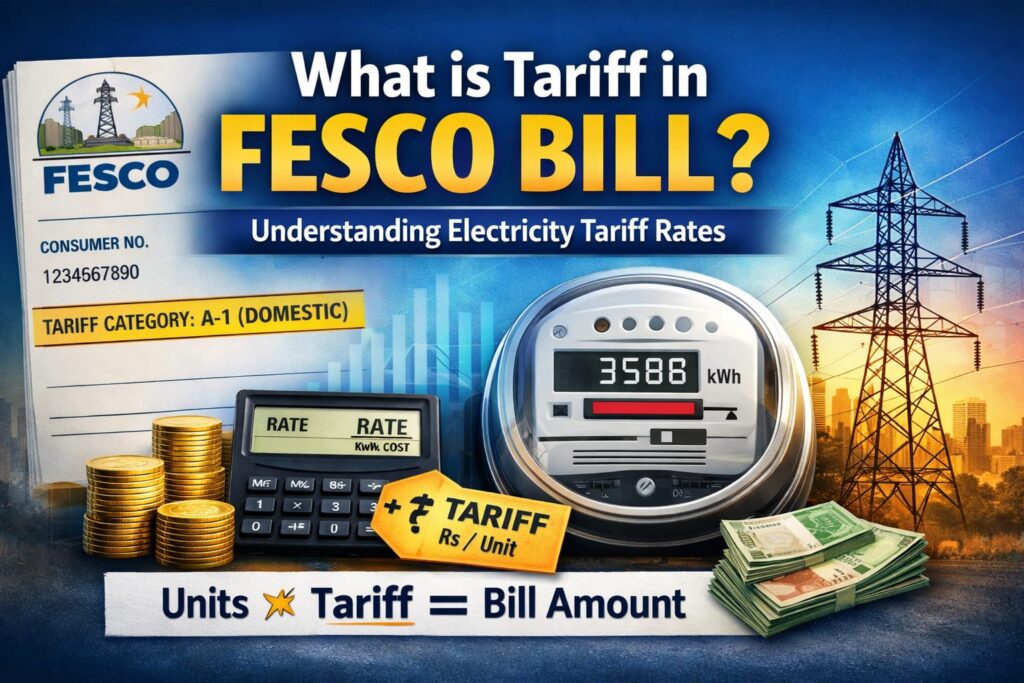
A tariff is the official rate at which electricity is charged per unit (kWh)
These rates are approved by NEPRA (National Electric Power Regulatory Authority) and applied by FESCO.
In simple words:
Tariff = Price per unit of electricity
Your total bill is calculated using:
Units consumed
Applied tariff category
Taxes and surcharges
Why Tariff Is Important in a FESCO Bill
The tariff determines
1. Cost per electricity unit 2. Type of consumer (domestic, commercial, industrial) Whether slab rates or fixed charges apply Even if two users consume the same units, their bills can be different due to different tariff categories. If you want to check your FESCO bill, visit fescoobil.pk.”
Types of Tariff Categories in FESCO
FESCO divides consumers into different tariff categories based on usage types.
Domestic Tariff (Residential Consumers)
This tariff applies to homes and residential users.
Key features: Slab-based unit rates
Higher units = higher per-unit cost Protected and non-protected consumer system
Commercial Tariff
Used for: shop
Offices
Small businesses
Commercial tariffs are higher than domestic tariffs because electricity usage is business-oriented.
Industrial Tariff
Applied to Factories
Manufacturing units
Large industrial setups
These tariffs may include:
Peak and off-peak rates
Time of Use (TOU) meters
Agricultural Tariff
This tariff is used for: Agricultural motors
Rates are usually subsidized to support farmers
What Is TOU (Time of Use) Tariff
TOU tariff means electricity rates change based on time.
Peak Hours
Higher tariff. Usually evening hours.
Off-Peak Hours
Lower tariff. Night or low-load hours. TOU helps reduce load pressure on the power system
H2: Who Sets Tariff Rates in Pakistan
Approved by NEPRA
Implemented by FESCO
Updated periodically due to fuel price adjustments
FESCO itself does not set tariff prices
Why Your FESCO Bill Increases Even With Same Units
Your bill may increase due to: Change in tariff slab Fuel Price Adjustment (FPA) Quarterly tariff adjustments Seasonal tariff changes Understanding your tariff helps you control electricity usage.
How to Check Tariff Category on Your FESCO Bill
You can find tariff information:
On the front page of your FESCO bill
Near consumer details
Written as a code or category name
Final Thoughts
Tariff is the backbone of your electricity bill. Once you understand FESCO tariff categories and rates, you can easily analyze your bill and reduce unnecessary costs.
1. What is tariff in a FESCO electricity bill?
Tariff in a FESCO bill refers to the official electricity rate per unit (kWh) applied to a consumer. It determines how much you pay for electricity based on your usage category, such as domestic, commercial, or industrial
2. Who decides electricity tariff rates in Pakistan?
Electricity tariff rates in Pakistan are approved by NEPRA (National Electric Power Regulatory Authority). Distribution companies like FESCO only implement these rates; they do not set them.
3. Why does my FESCO bill increase even when units remain the same?
Your FESCO bill may increase due to:
Change in tariff slab
Fuel Price Adjustment (FPA)
Quarterly or annual tariff revisions
Seasonal tariff changes
4. What is the difference between domestic and commercial tariff in FESCO?
Domestic tariff applies to residential homes and is usually slab-based, while commercial tariff applies to businesses and shops and has higher per-unit rates.
5. What is TOU tariff in FESCO bill?
TOU (Time of Use) tariff charges different rates for peak and off-peak hours. Electricity is more expensive during peak hours and cheaper during off-peak hours.