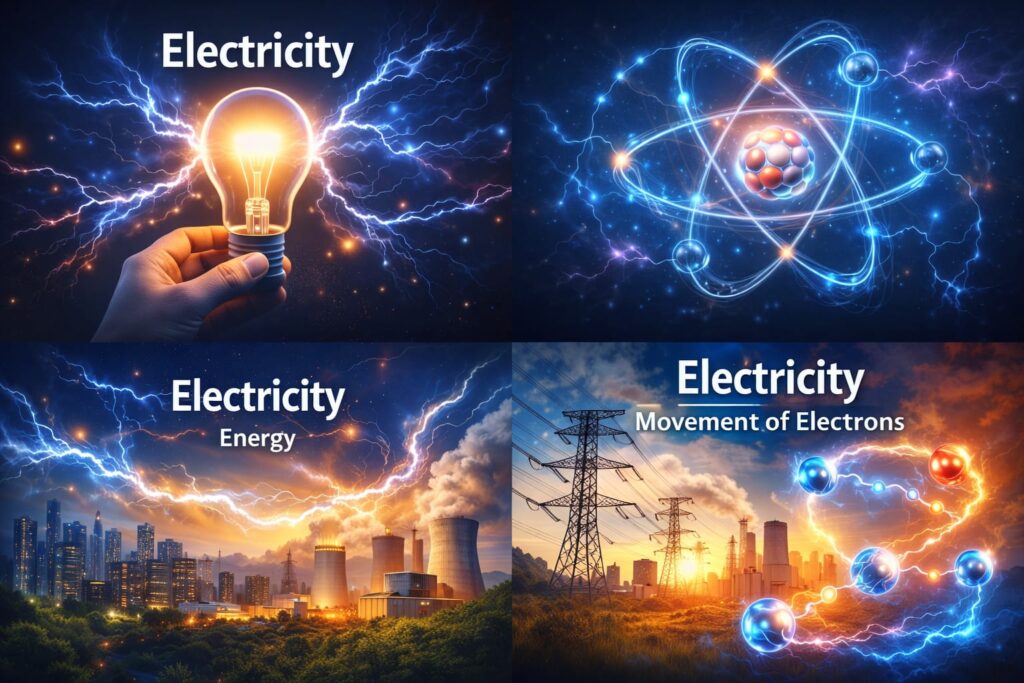
Electricity plays a vital role in modern life. Homes, industries, hospitals, and businesses all depend on a stable power supply. In Pakistan, electricity is generated through different methods using multiple energy sources. This article explains how electricity is produced, the complete generation procedure, types of electricity generation, and where electricity is produced in Pakistan. If you want to check your FESCO bill, visit fescoobil.pk.”
What Is Electricity?
Electricity is a form of energy created by the movement of electrons. It is generated at power plants and delivered to consumers through transmission and distribution networks.
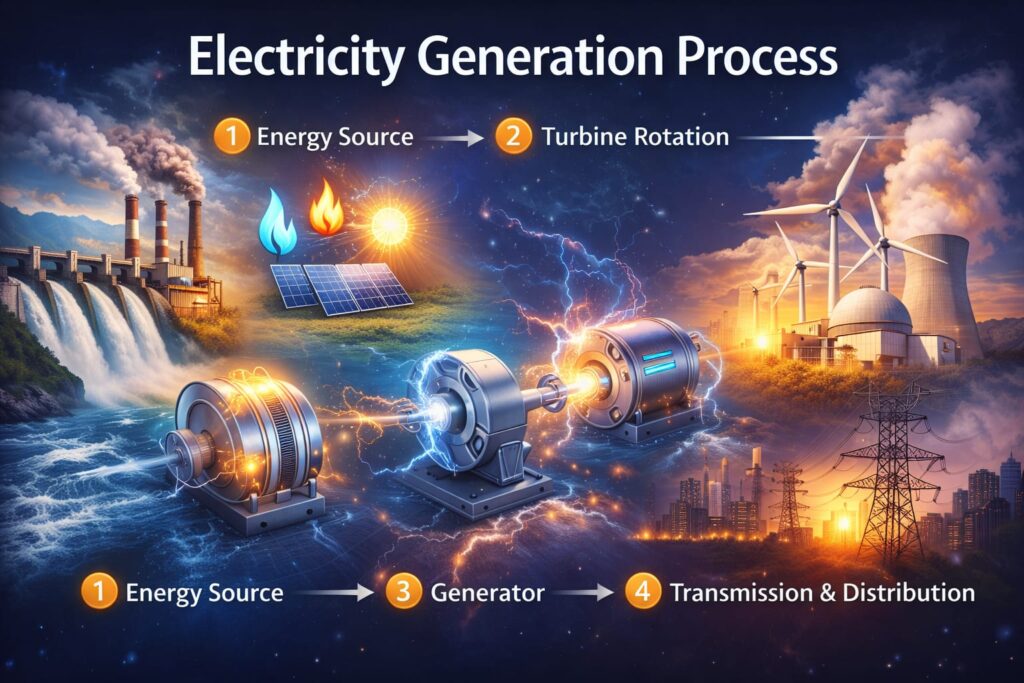
How Is Electricity Generated? (Step-by-Step Process)
Electricity generation follows these basic steps:
1. Energy Source
A primary energy source is used, such as:
Water
Gas, coal, or oil
Sunlight
Wind
Nuclear fuel
2. Turbine Rotation
The energy source spins a turbine:
Flowing water rotates turbines in dams
Steam rotates turbines in thermal plants
Wind turns turbine blades Solar panels convert sunlight directly into electricity
3. Generator
The turbine is connected to a generator.
When the turbine rotates, the generator converts mechanical energy into electrical energy.
4. Transmission & Distribution
Electricity is transmitted through:
High-voltage transmission lines
Grid stations
Distribution companies (DISCOs)
Finally delivered to homes and industries
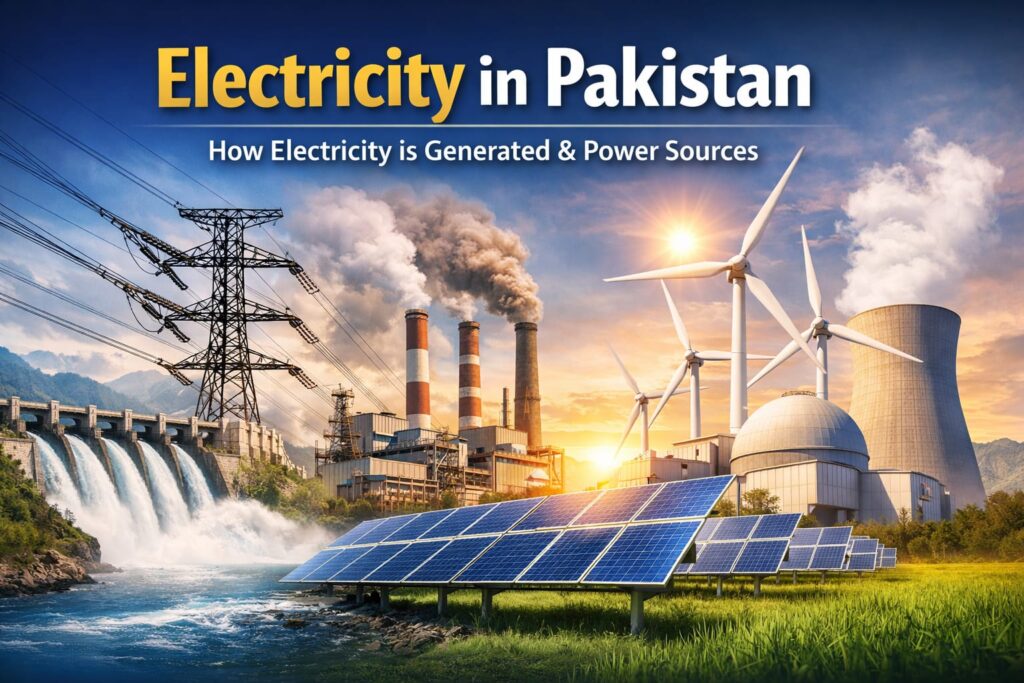
Types of Electricity Generation in Pakistan
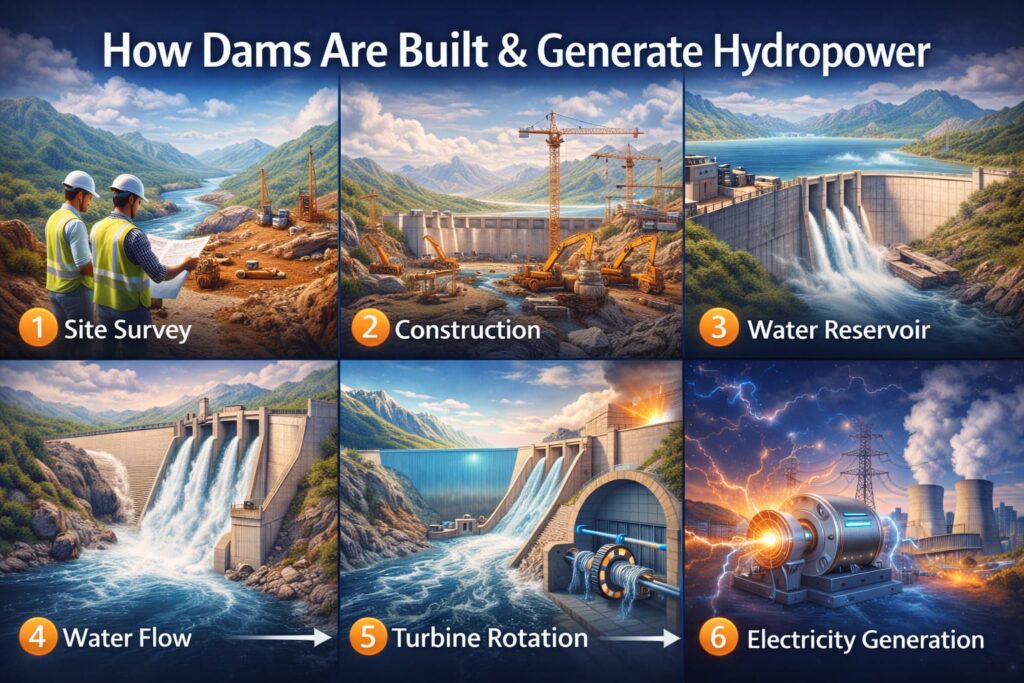
1. Hydropower (Water Energy)
Hydropower is one of the cheapest and cleanest energy sources in Pakistan.
Major Hydropower Projects:
Tarbela Dam
Mangla Dam
Neelum–Jhelum Hydropower Project
Ghazi Barotha
Advantages: ✔ Renewable
✔ Low cost
✔ Environment friendly
2. Thermal Power (Gas, Oil & Coal)
Thermal power plants produce electricity by burning fuel to create steam.
Fuel Types:
Natural Gas
Furnace Oil
Coal (Thar Coal Project)
Major Thermal Power Plants:
Guddu Power Plant
Jamshoro Power Plant
Sahiwal Coal Power Plant
Advantages & Disadvantages: ✔ Reliable power supply
❌ Expensive
❌ Causes air pollution
3. Solar Energy
Solar power uses sunlight to generate electricity through photovoltaic panels.
Major Solar Projects in Pakistan:
Quaid-e-Azam Solar Park (Bahawalpur)
Rooftop solar systems
✔ Renewable
✔ No fuel cost
✔ Ideal for long-term energy savings
4. Wind Energy
Wind turbines convert wind power into electricity.
Wind Power Areas in Pakistan:
Jhimpir (Sindh)
Gharo (Sindh)
✔ Clean energy
✔ Eco-friendly
✔ Low operating cost
5. Nuclear Power
Nuclear energy produces electricity using controlled nuclear reactions. Pakistan relies on nuclear energy as a key source of electricity, especially to meet the growing demand. The country has nuclear power plants like Chashma and Karachi Nuclear Power Plants, which provide clean and reliable energy. Nuclear energy helps Pakistan reduce dependence on fossil fuels and supports the overall electricity generation mix.
Key Points:
Main plants: Chashma (C-1 to C-4), Karachi Nuclear Power Plant
Contributes around 5–6% of total electricity generation
Provides stable and low-carbon energy
Where Is Electricity Generated in Pakistan?
Electricity in Pakistan is generated from multiple sources across the country, including thermal, hydropower, nuclear, and renewable energy plants. Major power generation sites are located in provinces like Punjab, Sindh, Khyber Pakhtunkhwa, and Balochistan, where large power plants supply electricity to the national grid.
Key Points:
Thermal plants: Guddu, Jamshoro, Hub, Sahiwal
Hydropower plants: Tarbela, Mangla, Ghazi-Barotha
Nuclear plants: Chashma, Karachi
Renewable energy: Wind (Gharo, Jhimpir) and solar projects across Sindh and Balochistan
Challenges and Solutions in Electricity Generation in Pakistan
Electricity generation in Pakistan is crucial for powering industries, businesses, and households. While the country has made significant progress in expanding its energy capacity, it still faces numerous challenges that affect electricity availability and reliability. Understanding these challenges and the solutions being implemented is key to achieving a sustainable and efficient electricity sector in Pakistan.
Challenges in Electricity Generation
Pakistan’s electricity sector encounters several critical challenges:
1. Load Shedding and Power Shortages
Frequent power outages are one of the main problems in Pakistan. Despite generating electricity from multiple sources, the demand often exceeds supply, especially during peak hours and extreme weather conditions. Load shedding affects both residential areas and industrial production, slowing down economic growth.
2. Outdated Infrastructure
Many of Pakistan’s thermal and hydropower plants are aging and operate at lower efficiency levels. Transmission lines and distribution networks also suffer from technical losses, reducing the effective electricity delivered to consumers.
3. Dependence on Fossil Fuels
A significant portion of Pakistan’s electricity comes from thermal power plants that rely on coal, oil, and natural gas. This makes the sector vulnerable to fuel price fluctuations and shortages, affecting electricity production.
4. Limited Renewable Energy Integration
Although renewable energy sources like wind, solar, and small hydropower are growing, their contribution is still less than 5% of the total electricity generated. Expanding renewable capacity is challenging due to initial investment costs and infrastructure limitations.
5.Financial and Operational Challenges
Electricity generation companies face financial constraints due to unpaid bills, subsidies, and inefficiencies in collection. This limits their ability to upgrade plants or invest in new generation projects.
Solutions to Improve Electricity Generation
To address these challenges, Pakistan has adopted several strategies and solutions:
1. Expanding Renewable Energy
Investment in wind, solar, and small hydropower projects is increasing. Wind farms in Jhimpir and Gharo and solar projects in Sindh and Balochistan are helping Pakistan diversify its energy mix and reduce dependence on fossil fuels.
2. Upgrading Existing Power Plants
Thermal and hydropower plants are being modernized and upgraded to improve efficiency. Advanced technologies reduce fuel consumption and increase electricity output, ensuring more reliable supply.
3. Expanding Nuclear Energy
Nuclear power provides stable and low-carbon electricity. Pakistan is expanding nuclear capacity through plants like Chashma and Karachi Nuclear Power Plant, which contribute 5–6% of total electricity generation. Nuclear energy is key to reducing energy shortfalls during peak demand periods.
4. Improving Grid and Distribution Networks
The government and electricity companies are investing in modern transmission lines, smart grids, and distribution networks to reduce technical and non-technical losses. Better management of electricity distribution ensures that generated power reaches consumers efficiently.
5. Policy and Regulatory Reforms
Government reforms aim to reduce power theft, improve billing, and incentivize private investment in electricity generation. Clear policies encourage renewable energy projects and public-private partnerships, supporting sustainable energy development.
Impact of These Solutions
Implementing these solutions helps Pakistan:
Reduce load shedding and provide stable electricity to homes and industries
Lower carbon emissions by using more renewable and nuclear energy
Increase efficiency of power plants and reduce operational losses
Meet growing electricity demand in urban and rural areas
By addressing the challenges systematically, Pakistan can ensure a reliable, sustainable, and affordable electricity supply for the future.